
Chess Clock Tactics: Mastering Time Management for MSME Project Excellence
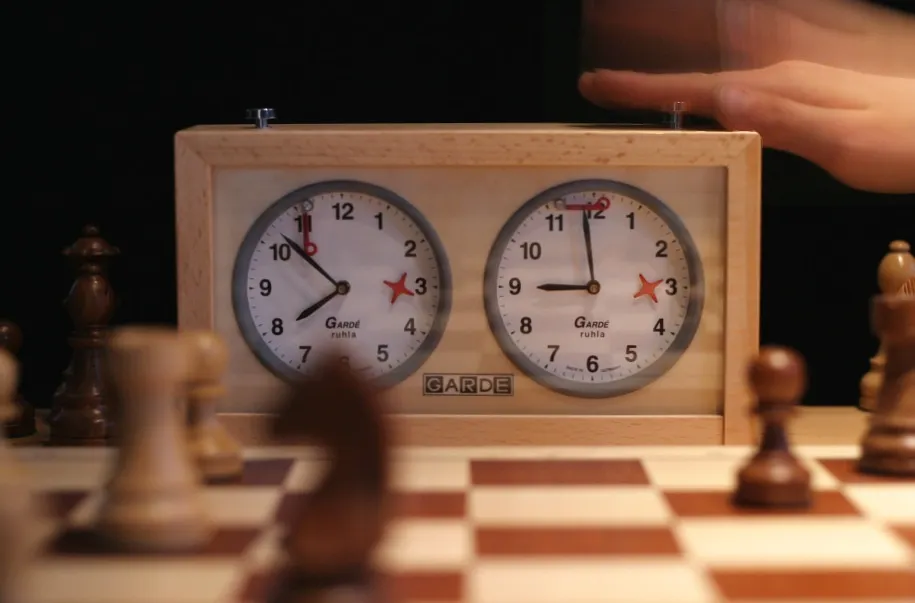
The game of chess stands as an epitome of strategic prowess, where each move and every second counts. It is a symphony of intricate calculations, tactical finesse, and masterful time management.
The concept of chess clocks, a device that apportions time for each player’s moves, provides a captivating analogy for the intricate art of project management, particularly in the context of Micro, Small, and Medium Enterprises (MSMEs). In this discourse, we embark on a journey to unravel the profound connections between the world of chess and the realm of project management.
We will also elucidate how the meticulous application of chess clock tactics can pave the path for efficient and triumphant project execution within MSMEs. The Chess Clock Chronicles In the grand theatre of chess, players are not merely engaged in a contest of intellect, but they are also waging a battle against the clock. Each move, every contemplation, and all strategic intricacies are executed within a constrained timeframe, meticulously divided between opponents by the chess clock. This instrument, emblematic of the relentless passage of time, serves as a metaphorical sword that both compels and restricts, thereby demanding the cultivation of acute decision-making skills, resourceful planning, and impeccable time allocation. Chess clock tactics stem from the realization that time is an invaluable resource, akin to a precious gem that should be skilfully managed and judiciously expended. In chess, players must not only contemplate their moves, but must also allocate their time efficiently across the entirety of the game. Such tactical temporal allocation is fundamentally analogous to the essence of project management within MSMEs.
The Parallels of Project Management In the complex landscape of business, where growth is both the aspiration and the challenge, MSMEs stand as the valiant warriors. These enterprises, driven by innovation and ingenuity, often find themselves navigating intricate projects that demand an astute blend of strategy, resource management, and, most critically, time allocation. In this scenario, the application of chess clock tactics offers a profound revelation. Much like a chess player, a project manager within an MSME faces the formidable task of orchestrating a symphony of actions, ensuring seamless coordination, efficient resource allocation, and, most crucially, the meticulous adherence to timelines. Project timelines, akin to the chess clock’s divisions, represent the invaluable temporal asset that must be managed judiciously. Akin to a player’s contemplation time, these timelines delineate the journey, shaping the progression of the project and influencing its ultimate success.
Strategies for Project Timelines and Resource Allocation
Crafting an effective project timeline necessitates a fusion of strategic insight and analytical acumen. This task parallels the opening moves of a chess game, where players establish the foundation for their subsequent manoeuvres. In the context of MSMEs, the process commences with a comprehensive understanding of the project’s objectives, scope, and intricacies. Just as a chess player assesses the board and anticipates potential challenges, project managers must envision the journey ahead, accounting for potential bottlenecks, resource constraints, and external variables. Equally vital is the principle of resource allocation – the art of deploying assets judiciously to optimize productivity and minimize wastage. Chess clock tactics underscore the importance of utilizing time wisely; similarly, effective resource allocation empowers MSMEs to leverage their assets optimally. To achieve this, project managers must cultivate a keen understanding of the team’s capabilities, allocate roles and responsibilities judiciously, and streamline workflows to mitigate redundancies.
Navigating the Milestones: A Grandmaster’s Approach
In both the world of chess and MSME project management, milestones stand as the pivotal junctures that chart progress and signify accomplishments. In the chess game, players strive for checkmate – the ultimate milestone that secures victory. In the business landscape, MSMEs pursue project milestones that culminate in successful outcomes, be it a product launch, market expansion, or process optimization. Akin to a chess player who continually reassesses their position and adapts their strategy, project managers within MSMEs must navigate milestones with a dynamic mindset. Adherence to timelines is vital, yet flexibility is equally imperative. Just as a chess player may sacrifice a piece to gain positional advantage, project managers might need to recalibrate timelines or reallocate resources to optimize progress. The key lies in an astute balance between rigidity and adaptability, embodying the essence of chess clock tactics.
The Collaborative Symphony: Communication and Collaboration
In both chess and project management, the path to success is paved with effective communication and harmonious collaboration. A chess player orchestrates their pieces with a strategic dialogue between each move, much like a project team coordinates their efforts to achieve project milestones. Within MSMEs, fostering an environment of open communication and collaborative synergy is paramount. Chess clock tactics underscore the importance of swift decision-making within time constraints. Similarly, efficient communication channels facilitate real-time decision-making within projects, enhancing responsiveness to challenges and fostering an environment of proactive problem-solving. Just as chess players share insights and strategies with their peers, MSME project teams must cultivate a culture of knowledge exchange, enabling the collective intellect to flourish.
Empowering Project Management: The Role of Tools
In the modern era, the chess clock has evolved from a mechanical device into a digital marvel, embodying precision and efficiency. Similarly, the realm of project management within MSMEs is augmented by an array of sophisticated tools and technologies. These digital aids serve as the strategic enablers that enhance decision-making, streamline workflows, and optimize resource allocation. Project management software, much like a digital chess clock, empowers MSMEs to synchronize their efforts seamlessly. These tools facilitate the creation of Gantt charts, Kanban boards, and collaborative platforms, thereby serving as the orchestrator’s baton that guides project execution. The synergy between technology and chess clock tactics encapsulates the essence of modern MSME project management – a symphony of strategy and innovation.
The Grandmaster’s Legacy
In the saga of chess, the grandmasters stand as luminous embodiments of strategic brilliance and timeless wisdom. Their triumphs are testaments to the fusion of acute intellect and precise time management. Similarly, within the realm of MSME project management, the implementation of chess clock tactics illuminates a pathway to excellence. In the spirit of a grandmaster, MSMEs can forge a legacy of triumphant project execution by embracing the principles of chess clock tactics. Just as each chess move is a calculated stroke towards victory, each project milestone within an MSME is a step closer to business success. By adeptly allocating time, resources, and efforts, MSMEs can manoeuvre through the complex landscape of project management, unfurling a tapestry of accomplishments that stand the test of time. Just as a chess player emerges victorious by orchestrating their moves within the ticking embrace of the chess clock, so too can MSMEs conquer the challenges of project execution through the symphony of meticulous time management.
In the grand symposium of business endeavours, the echoes of chess clock tactics reverberate – a testament to the timeless fusion of strategy, intellect, and time management.
Just as a grandmaster reigns supreme over the 64 squares of the chessboard, so can MSMEs reign supreme over the tapestry of projects, orchestrating their moves with the finesse of a master and the precision of a chess clock.